
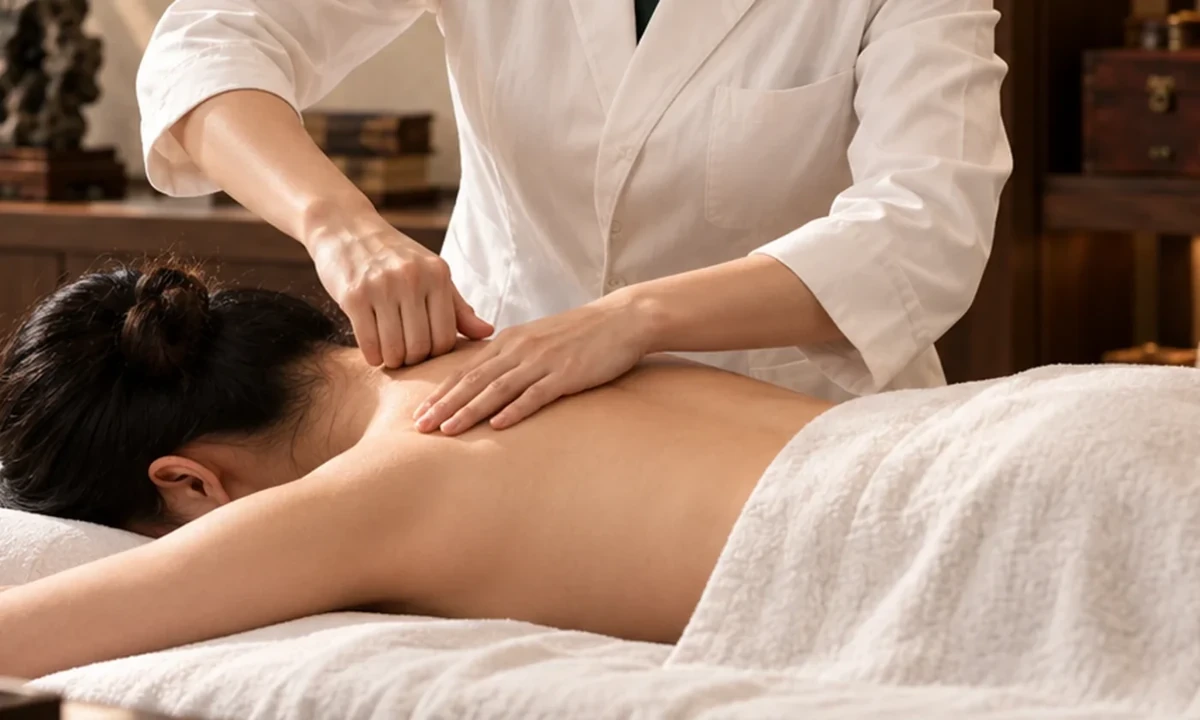
Tuina is not simply “the stronger the better”
Tuina may include pressing, rolling, kneading, mobilisation and other manual techniques. Intensity should be adapted to the person, the body area and the clinical situation. Strong pain during treatment is not proof that the treatment is effective.
Tell the practitioner about injuries and medical conditions first
Recent fractures, significant swelling, suspected blood clots, severe osteoporosis, neurological symptoms, recent surgery, skin infection and certain pregnancy-related situations can change what is appropriate. Bring relevant reports if you are already under specialist care.
Use a simple comfort scale
A useful session can involve pressure or temporary discomfort, but it should remain controllable. If you are holding your breath, tensing hard, feeling numbness, dizziness or sharp pain, say so immediately so the technique can be adjusted.
After the session, judge function rather than soreness
Temporary muscle tenderness can happen. More useful questions are whether movement, sleep or daily function improves over time. New weakness, numbness, significant swelling or rapidly worsening pain deserves medical assessment rather than repeated stronger massage.
A treatment plan needs a review point
If Tuina is being used for recurring pain, agree on what will be reviewed after several sessions. Continuing indefinitely without checking function, diagnosis or progress is not a complete plan.
Manual therapy should complement, not replace, necessary diagnosis
Pain after trauma, unexplained neurological symptoms, fever with severe pain, loss of bladder or bowel control and other red flags require conventional medical evaluation. Tuina should not delay that process.
This article is general health information, not a diagnosis or individual treatment plan. Seek conventional medical care promptly for severe, urgent or rapidly worsening symptoms.