
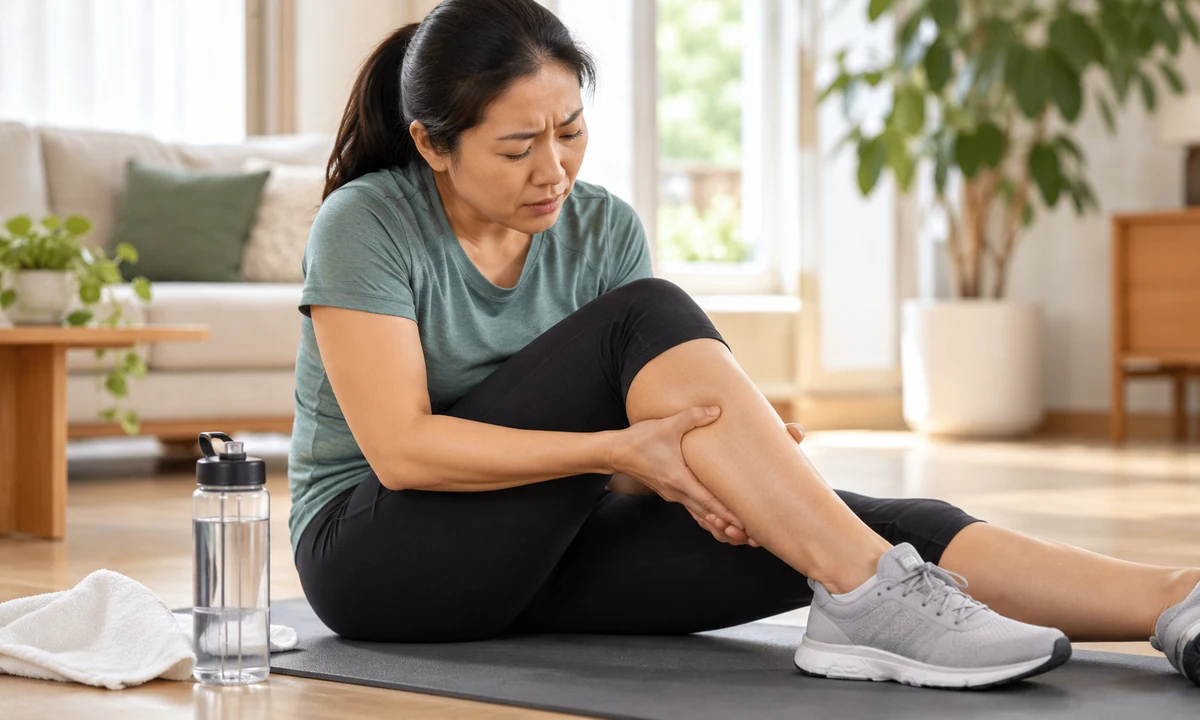
- Is it during exercise, after exercise, while sleeping or at random? Which muscle tightens, how long does it last and does gentle stretching change it? A short pattern diary is more useful than only remembering the worst episode.
- Singapore heat and sweating can increase fluid loss.
- Cramps can appear when training volume, hills, footwear or sport changes faster than the body adapts.
Describe when the cramp happens
Is it during exercise, after exercise, while sleeping or at random? Which muscle tightens, how long does it last and does gentle stretching change it? A short pattern diary is more useful than only remembering the worst episode.
Hydration matters, but more is not always better
Singapore heat and sweating can increase fluid loss. Replace fluids regularly and watch thirst, dizziness and urine output. People with heart or kidney conditions may have individual fluid limits, so excessive water or supplements are not a universal solution.
Review exercise changes
Cramps can appear when training volume, hills, footwear or sport changes faster than the body adapts. Build activity gradually. If there is a tear sensation, major swelling or inability to use the limb, treat it as an injury rather than an ordinary cramp.
Medicines can be relevant
Some medicines can affect fluid balance or mineral levels. If cramps started after a new prescription or dose change, bring the medicine list to the prescribing doctor or pharmacist. Do not stop medicines on your own.
Where TCM may fit
Acupuncture, Tuina or lifestyle advice may be considered for muscular tension and recovery when the person is otherwise stable. A hot, swollen calf, infected skin or unexplained severe limb pain should not simply be massaged.
Red flags should not be massaged away
A swollen, red, warm painful leg, new severe weakness, persistent numbness, severe dehydration or sudden chest pain or breathlessness requires medical assessment; chest symptoms with a swollen painful leg can be an emergency.
Related reading and next steps
This page provides general health education, not an individual diagnosis or emergency plan. Persistent, severe, sudden or rapidly worsening symptoms require appropriate conventional medical assessment.