
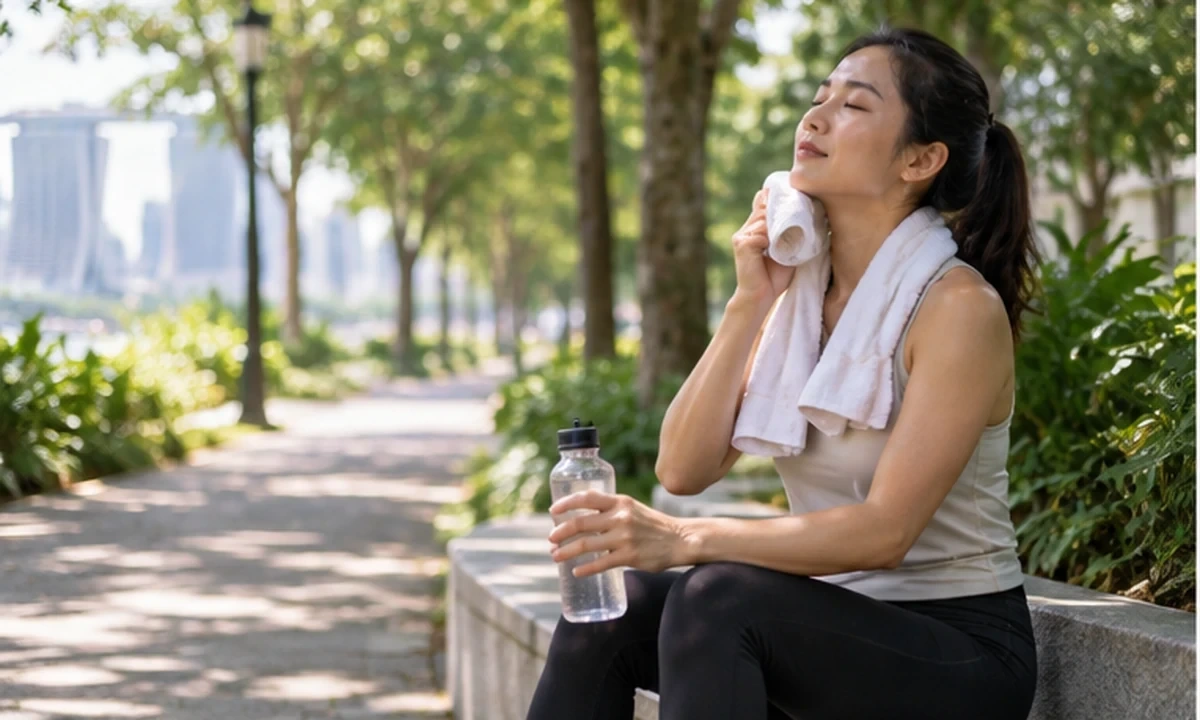
- Heat exhaustion and heat stroke are medical issues, not TCM “heatiness”.
- Hydration needs vary with activity, sweating and health conditions.
- TCM lifestyle advice should sit alongside basic heat-safety measures.
Start with exposure
Outdoor work, long commutes, exercise, crowded events and poorly ventilated rooms can all increase heat load. Plan heavier activity for cooler times where possible, take shaded breaks and change out of sweat-soaked clothing if skin irritation becomes a problem.
Hydration is not one fixed number
People who sweat heavily, exercise or spend long periods outdoors may need more fluid. Some also need electrolytes during prolonged heavy sweating. People with heart, kidney or other conditions may have individual fluid advice.
Sleep in a humid climate
Cooling the bedroom can improve comfort, but very cold air-conditioning may dry the throat or worsen nasal symptoms in some people. Aim for a comfortable environment rather than a dramatic temperature change.
TCM language and practical habits
TCM may describe some symptoms using terms related to heat, dampness or constitution. These are traditional concepts and should not be confused with heat exhaustion, dehydration or infection.
Know the danger signs
Confusion, fainting, very high body temperature, severe weakness, inability to keep fluids down or collapse can indicate serious heat illness. Seek urgent medical help rather than relying on drinks, herbs or home remedies alone.
This guide is general education, not a diagnosis or personal treatment plan. Persistent, severe or rapidly worsening symptoms should be medically assessed.