
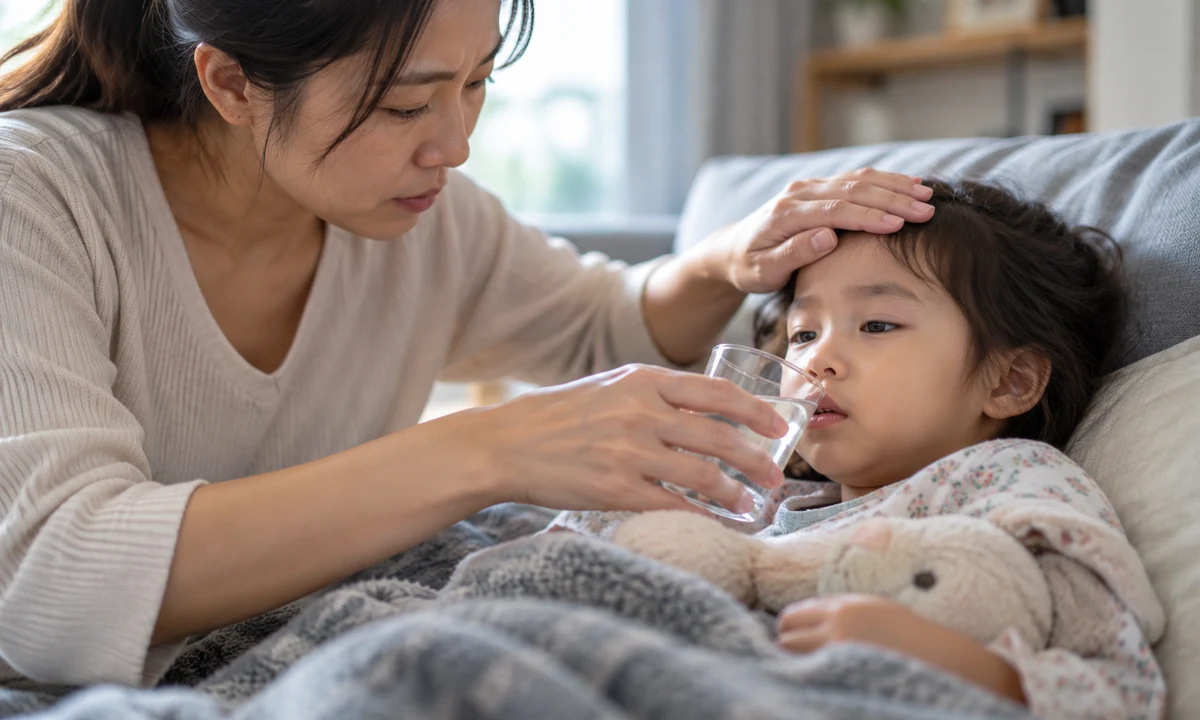
- Hand, foot and mouth disease (HFMD) is common in young children in Singapore, though older children and adults can also be infected.
- Fever, sore throat or reduced appetite may come before mouth ulcers and hand/foot lesions.
- Drowsiness that is difficult to rouse, repeated vomiting, breathing difficulty, seizures, severe headache/neck stiffness or signs of significant dehydration need urgent assessment.
Why this deserves attention
Hand, foot and mouth disease (HFMD) is common in young children in Singapore, though older children and adults can also be infected. It usually causes fever, mouth sores and a rash or blisters on the hands and feet. Hydration is often the practical challenge because mouth ulcers can make drinking painful.
The aim is not to self-diagnose from one symptom. Onset, progression, impact on basic function and the person’s age, pregnancy status and existing conditions all affect how quickly medical review is needed.
Patterns and practical observations
- Fever, sore throat or reduced appetite may come before mouth ulcers and hand/foot lesions.
- A child who refuses drinks, urinates much less or becomes unusually sleepy may be dehydrating or becoming more unwell.
- HFMD spreads through respiratory secretions, blister fluid and stool; hand hygiene and cleaning high-touch surfaces matter.
- Keep unwell children away from school/childcare according to current public-health and facility guidance.
A short timeline is often more useful than a vague description: note when symptoms began, how fast they changed, triggers, associated symptoms and any objective readings you already have. Do not delay care just to wait for a more “textbook” pattern.
Medical assessment and next steps
- Comfortable fluids and age-appropriate symptom relief can help maintain intake.
- Antibiotics do not treat HFMD itself. Avoid breaking blisters deliberately.
- Because children can deteriorate differently from adults, persistent fever, reduced drinking or unusual behaviour merits medical review.
Tests and treatment are individual. An online guide cannot replace examination, laboratory testing, imaging or specialist judgement; if you already have prescribed treatment, discuss changes with the treating team rather than adjusting it independently.
Where TCM may fit
TCM should not replace paediatric assessment when a child is dehydrated, unusually drowsy or neurologically unwell. Any herbs used in children require extra caution with age, dose and product quality.
Tell both the TCM practitioner and medical team about every herb, supplement, prescription and over-the-counter medicine. “Natural” does not mean interaction-free, particularly in pregnancy, breastfeeding, liver/kidney disease, anticoagulation or polypharmacy.
When not to wait
- Drowsiness that is difficult to rouse, repeated vomiting, breathing difficulty, seizures, severe headache/neck stiffness or signs of significant dehydration need urgent assessment.
- Seek earlier review for very young children or medically vulnerable people.
In Singapore, call 995 for a life-threatening emergency. If symptoms are serious and you are unsure, prioritise appropriate conventional medical assessment rather than waiting for a complementary-care appointment.
Related reading
Singapore references
This page was checked in September 2026 against current Singapore public-health / healthcare information. These links are for further reading; individual screening intervals, diagnostic thresholds and treatment should still be decided by your own medical team.
This page provides general health education, not an individual diagnosis or emergency plan. Sudden, severe, persistent or rapidly worsening symptoms—especially the red flags above—require appropriate conventional medical assessment.