
- A fever in a young infant deserves more caution than the same temperature in an older child.
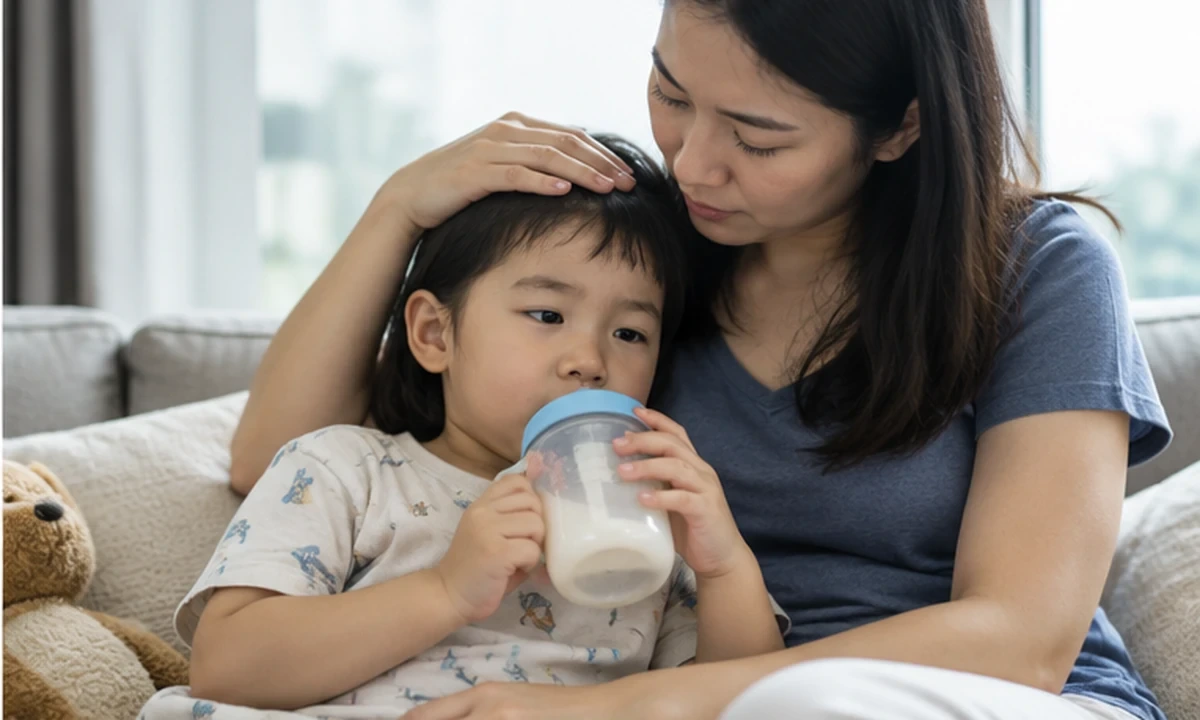
- Offer frequent small amounts of suitable fluid.
- Use a reliable thermometer and record the reading, time and method.
Start with age and overall condition
A fever in a young infant deserves more caution than the same temperature in an older child. Observe whether the child is alert, making eye contact, drinking, urinating and breathing comfortably.
Hydration is a practical priority
Offer frequent small amounts of suitable fluid. Breastfeeding can continue. Watch urine frequency, dry mouth, tears, sunken eyes and persistent vomiting. A child who cannot keep fluids down or is urinating much less may be dehydrating.
Temperature is information, not the whole illness
Use a reliable thermometer and record the reading, time and method. The aim of fever medicine, when appropriate, is usually comfort rather than forcing the temperature to a perfect number. Follow age- and weight-appropriate dosing instructions.
Breathing and responsiveness are red flags
Seek urgent assessment if a child is breathing very fast, struggling for breath, turning blue or grey, too breathless to drink, unusually floppy, difficult to wake or poorly responsive.
Avoid common medication mistakes
Do not give aspirin to children unless specifically instructed by a doctor. Avoid alternating several fever medicines without clear guidance, and check combination cold products to avoid giving the same ingredient twice.
TCM should not delay urgent care
Children are not small adults. Herbal products can have active ingredients and dosing can be difficult. Do not use herbs, gua sha or other traditional methods as a reason to postpone medical assessment when red flags are present.
Related reading and next steps
This page provides general health education, not an individual diagnosis or emergency plan. Persistent, severe, sudden or rapidly worsening symptoms require appropriate conventional medical assessment.