
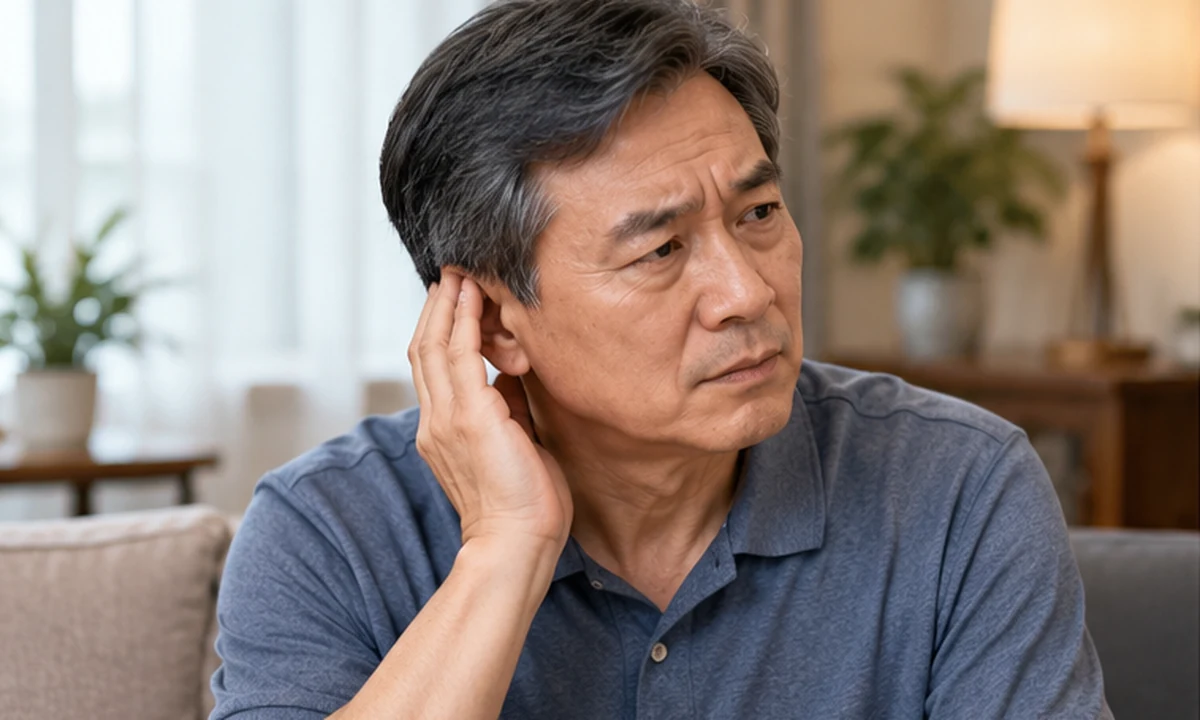
- One-sided persistent tinnitus deserves hearing assessment.
- A sound that matches the heartbeat (pulsatile tinnitus) needs medical review.
- Sudden hearing loss with tinnitus is more urgent than long-standing stable ringing.
Why this deserves attention
Tinnitus means hearing a sound without an external source — ringing, buzzing, humming or other noises. It can follow loud-noise exposure or accompany hearing loss, earwax, medications and many other conditions. Stress and poor sleep can make it more intrusive even when they are not the original cause.
What makes it more important
Review recent loud-noise exposure, new medicines, dizziness and hearing changes. Avoid turning earphones louder to mask tinnitus, because additional noise exposure may worsen hearing damage.
What to do next
A hearing test can identify whether hearing loss accompanies tinnitus. Depending on the pattern, a doctor or ENT specialist may consider additional evaluation. Long-standing tinnitus can also be managed with education, sound strategies and sleep/stress support.
Where TCM may fit
TCM may be used as complementary symptom support, but it should not be presented as guaranteed to “cure tinnitus”. New unilateral or pulsatile tinnitus still needs medical assessment.
When not to wait
Seek urgent care for tinnitus with sudden hearing loss, new neurological symptoms, severe vertigo with inability to walk, or after significant head injury.
Related reading and Singapore resources
This page provides general health education, not an individual diagnosis or emergency plan. Sudden, severe, persistent or rapidly worsening symptoms — especially red flags — require appropriate conventional medical assessment.