
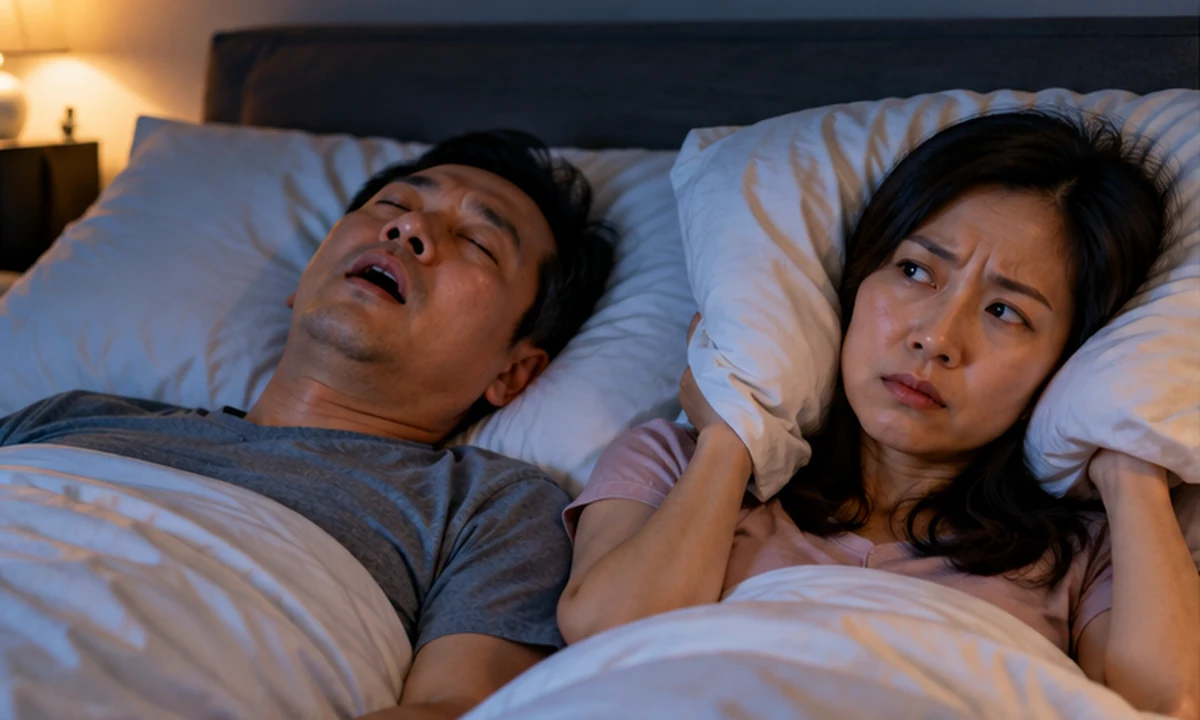
- Loud snoring alone does not diagnose sleep apnoea, but snoring plus witnessed breathing pauses, choking or marked daytime sleepiness deserves medical review.
- Morning headaches, dry mouth, poor concentration and repeated night-time urination can accompany disrupted sleep, but they also have other causes.
- TCM may be discussed for comfort, stress or sleep routine support, but it cannot replace a sleep study, airway assessment or prescribed treatment for obstructive sleep apnoea.
Snoring is not the same as normal sleep
Snoring happens when tissues in the upper airway vibrate during sleep. It may be harmless, but obstructive sleep apnoea is different: the airway repeatedly narrows or closes enough to disturb breathing and sleep quality. A partner may notice pauses followed by snorts, gasps or sudden body movement. Because the sleeper may not remember these events, outside observations can be useful.
Notice the daytime clues too
Persistent sleepiness while reading, watching television, sitting in meetings or driving is important. Other clues can include unrefreshing sleep, morning headache, dry mouth, irritability, reduced concentration or repeated waking to urinate. None of these proves sleep apnoea on its own, but a cluster of symptoms makes assessment more worthwhile.
Some people have a higher risk
Risk can rise with excess body weight, a crowded upper airway, large tonsils, certain jaw or facial structures, increasing age, alcohol near bedtime and some sedating medicines. People with high blood pressure, heart rhythm problems or diabetes may also be more likely to have sleep apnoea. Risk factors are not a diagnosis; lean people can have it too.
Medical assessment comes before “sleep remedies”
A doctor may review symptoms, medicines, blood pressure, nasal or throat issues and whether a formal sleep study is appropriate. If sleep apnoea is confirmed, treatment depends on its cause and severity. Options can include weight management when relevant, positional measures, airway devices, CPAP or specialist treatment. Do not delay this assessment while trying herbs or supplements.
Driving and workplace safety matter
If you are fighting sleep while driving, operating machinery or doing safety-sensitive work, treat that as a safety problem rather than a wellness inconvenience. Stop driving when drowsy and seek medical advice. Coffee and short naps may temporarily increase alertness, but they do not treat repeated airway obstruction during sleep.
Where TCM may fit responsibly
After serious sleep-breathing problems are assessed, a TCM consultation may explore stress, nasal comfort, sleep routine and other symptoms. Tell the practitioner if you use CPAP, take sedating medicine, have cardiovascular disease or have been diagnosed with sleep apnoea. Any herbal product should be considered alongside your medication list rather than as a substitute for prescribed therapy.
What to bring to an appointment
For one to two weeks, note bedtime, wake time, awakenings, naps and daytime sleepiness. Ask a partner whether they notice loud snoring, pauses, choking or gasping. Bring your medicine and supplement list and mention morning headaches, high blood pressure or near-miss drowsy-driving episodes. A short, accurate record is more useful than trying to interpret symptoms yourself.
Related reading and next steps
This page provides general health education, not an individual diagnosis or emergency plan. Persistent, severe, sudden or rapidly worsening symptoms require appropriate conventional medical assessment.