
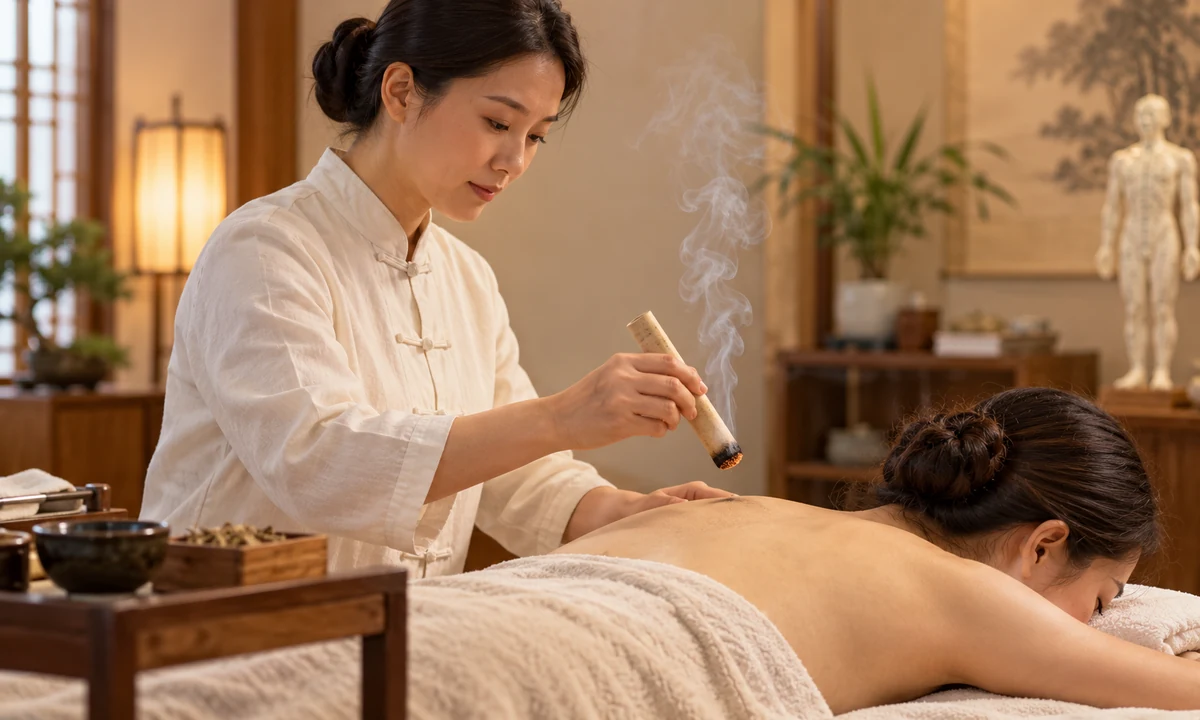
Moxibustion is a heat-based therapy
Moxibustion traditionally uses processed mugwort to provide heat near selected areas. The practical safety questions are straightforward: how close the heat is, whether the person can feel it normally, how long exposure lasts and whether the room is appropriately ventilated.
Reduced sensation changes the risk
Diabetes with neuropathy, nerve injury, very fragile skin, reduced consciousness and certain circulatory problems can make burns harder to notice. Tell the practitioner if you have altered sensation or a history of poor wound healing.
Heat should feel controlled, not threatening
Warmth may be expected; burning, stinging or intolerable heat is not something to endure. Speak up early. The treatment can be moved, stopped or adjusted before skin injury occurs.
Smoke and ventilation deserve practical attention
Traditional moxa can produce smoke and odour. People with asthma, respiratory sensitivity or strong smoke intolerance should discuss this in advance. Smokeless alternatives or other approaches may be considered depending on the situation.
After treatment, inspect the skin
Mild warmth or temporary redness may occur. Blistering, persistent pain, marked swelling or skin damage should be assessed. Do not apply additional heat to an area that already feels irritated.
Not every symptom needs another therapy added
Moxibustion should have a clear reason for being included. It is reasonable to ask what it is intended to support, what precautions matter and how the practitioner will decide whether it is useful.
This article is general health information, not a diagnosis or individual treatment plan. Seek conventional medical care promptly for severe, urgent or rapidly worsening symptoms.