
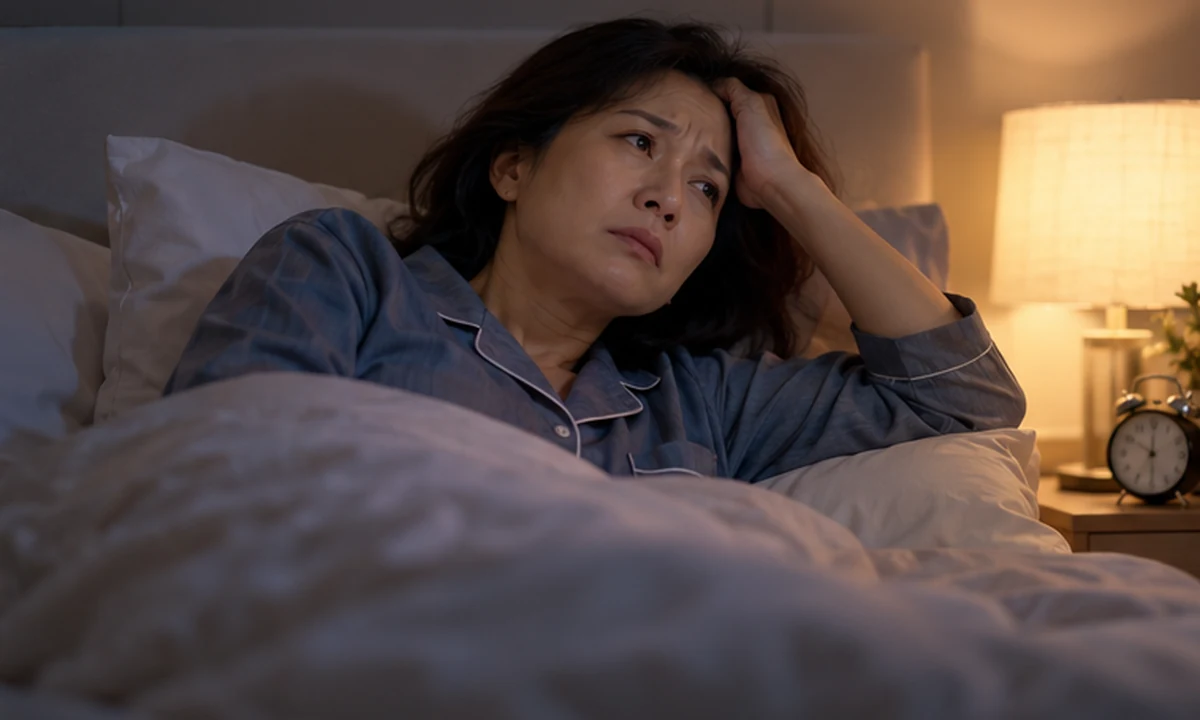
- Menopause experiences vary widely; not every symptom should be assumed to have one cause.
- Sleep, mood, bleeding changes and medicines are important parts of a proper history.
- New heavy bleeding, chest pain or significant mental-health symptoms need appropriate medical assessment.
A transition, not one identical experience
Some people have few symptoms around menopause, while others notice hot flushes, disturbed sleep, mood changes, joint discomfort or changes in concentration. The pattern can shift over time. A useful conversation starts with what is actually affecting you rather than assuming every symptom is “hormonal”.
Why sleep often becomes the first concern
Night sweats, stress, caring responsibilities, work and changes in sleep rhythm can all contribute. Track bedtime, night waking, hot flushes, alcohol and caffeine, medicines and daytime energy. This can help a doctor or TCM practitioner understand the pattern more clearly.
What a TCM consultation may explore
TCM assessment may include sleep, digestion, temperature sensations, energy, emotional wellbeing and other symptoms. Traditional pattern language is used within TCM and is not a replacement for medical evaluation of abnormal bleeding, thyroid problems, anaemia or other conditions that may present with overlapping symptoms.
Support should be individual, not marketed as a cure
Depending on suitability, TCM care may include acupuncture or other approaches aimed at symptom support. Expectations should remain realistic. If you use prescription medicines, hormone therapy or supplements, tell the practitioner so that care can be discussed safely.
When medical review matters
Seek medical advice for new or heavy bleeding after periods have stopped, persistent pelvic pain, unexplained weight loss, significant depression or anxiety, or symptoms that are rapidly worsening. Emergencies such as chest pain, severe breathlessness or stroke-like symptoms require urgent care.
Track changes rather than normalising them
Record cycle timing where relevant, pain, bleeding changes, sleep, mood, medicines and symptoms that are new or worsening. Ask what can reasonably be supported with TCM, what should be investigated medically, how progress will be reviewed and whether any herbal or supplement recommendation could interact with current treatment.
Use a symptom calendar
A simple calendar can capture pain, bleeding, sleep, hot flushes, mood, headaches, digestive symptoms and medicines. Patterns over two or three cycles, where relevant, are often more useful than remembering one difficult day. The record can also make it easier to notice when a symptom has genuinely changed and deserves medical evaluation rather than being normalised as “just part of being a woman”.
This guide is general education, not a diagnosis or personal treatment plan. Persistent, severe or rapidly worsening symptoms should be medically assessed.