
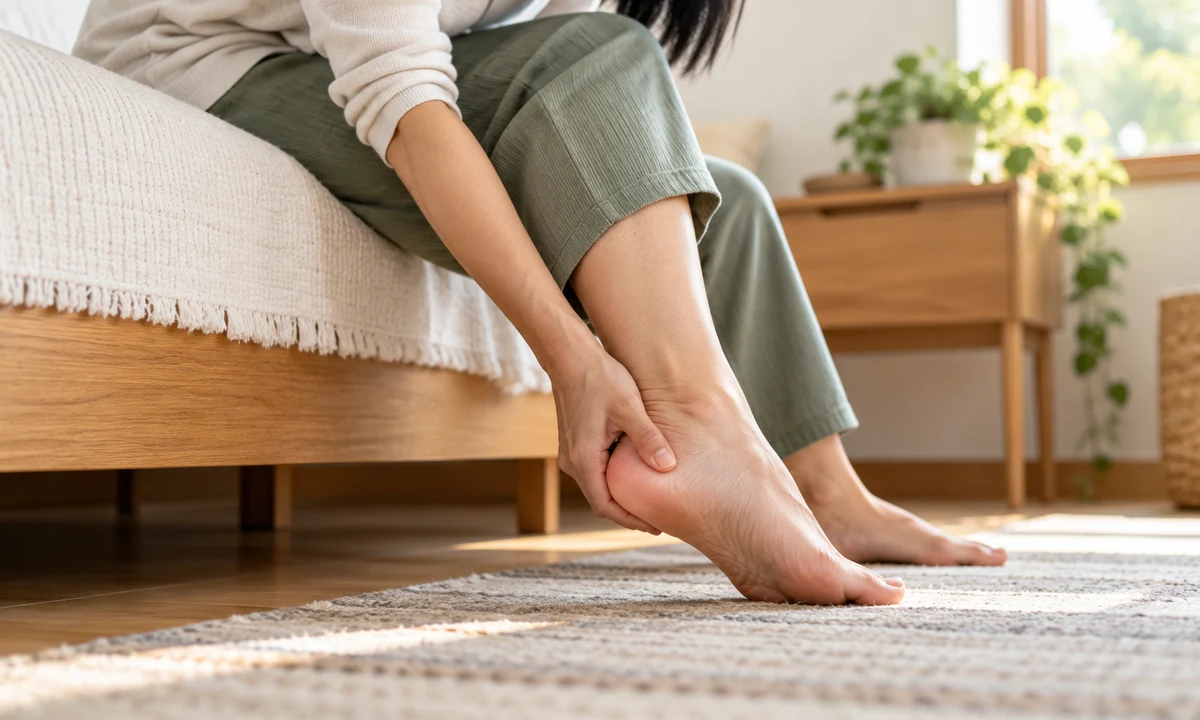
- Pain under the heel that is worst with the first steps in the morning or after sitting is a common plantar fasciitis pattern.
- A sudden injury, marked swelling, inability to bear weight, numbness or persistent night pain needs assessment for other causes.
- Footwear, calf flexibility and gradual activity changes often matter as much as passive treatment.
The classic pattern is “first-step” pain
Plantar fasciitis often causes pain near the inner underside of the heel. It may be most noticeable when you first stand in the morning or after sitting for a long time, improve as you move, then return after prolonged standing or walking. Not every heel pain follows this pattern.
Think about recent load changes
A sudden increase in running, walking, standing or jumping can overload the plantar fascia. Changes in footwear, body weight or calf tightness may also contribute. Recovery planning works better when you identify what changed in the weeks before symptoms began.
Supportive footwear can reduce repeated irritation
Very worn shoes, unsupportive slippers or going barefoot on hard floors may aggravate some people. Footwear does not need to be expensive, but it should be comfortable and appropriate for the activity. Inserts or heel cups can help selected people but are not a universal cure.
Stretching and strength need patience
Gentle calf and plantar fascia stretching, gradual foot and calf strengthening and sensible activity modification are commonly used. Improvement can take weeks or months. Repeatedly testing the heel with long walks or sudden running can restart irritation even when it feels better for a few days.
Do not label every heel pain as plantar fasciitis
Stress fractures, nerve irritation, inflammatory arthritis, Achilles problems and other conditions can cause heel pain. Seek assessment for severe swelling, inability to bear weight, significant trauma, numbness, redness with fever, persistent night pain or symptoms that do not improve as expected.
Where TCM may fit
Acupuncture or Tuina may be used for pain modulation or muscle tightness around the calf and foot. Treatment should be gentle enough for the current stage and should not replace load management, footwear changes or medical assessment when the diagnosis is uncertain.
Use a simple recovery measure
Instead of judging only whether pain exists, track morning first-step pain, walking tolerance and how the heel feels the day after activity. Increase load gradually when these markers are stable. A slow upward trend in function is more useful than chasing a completely pain-free day.
Related reading and next steps
This page provides general health education, not an individual diagnosis or emergency plan. Persistent, severe, sudden or rapidly worsening symptoms require appropriate conventional medical assessment.