
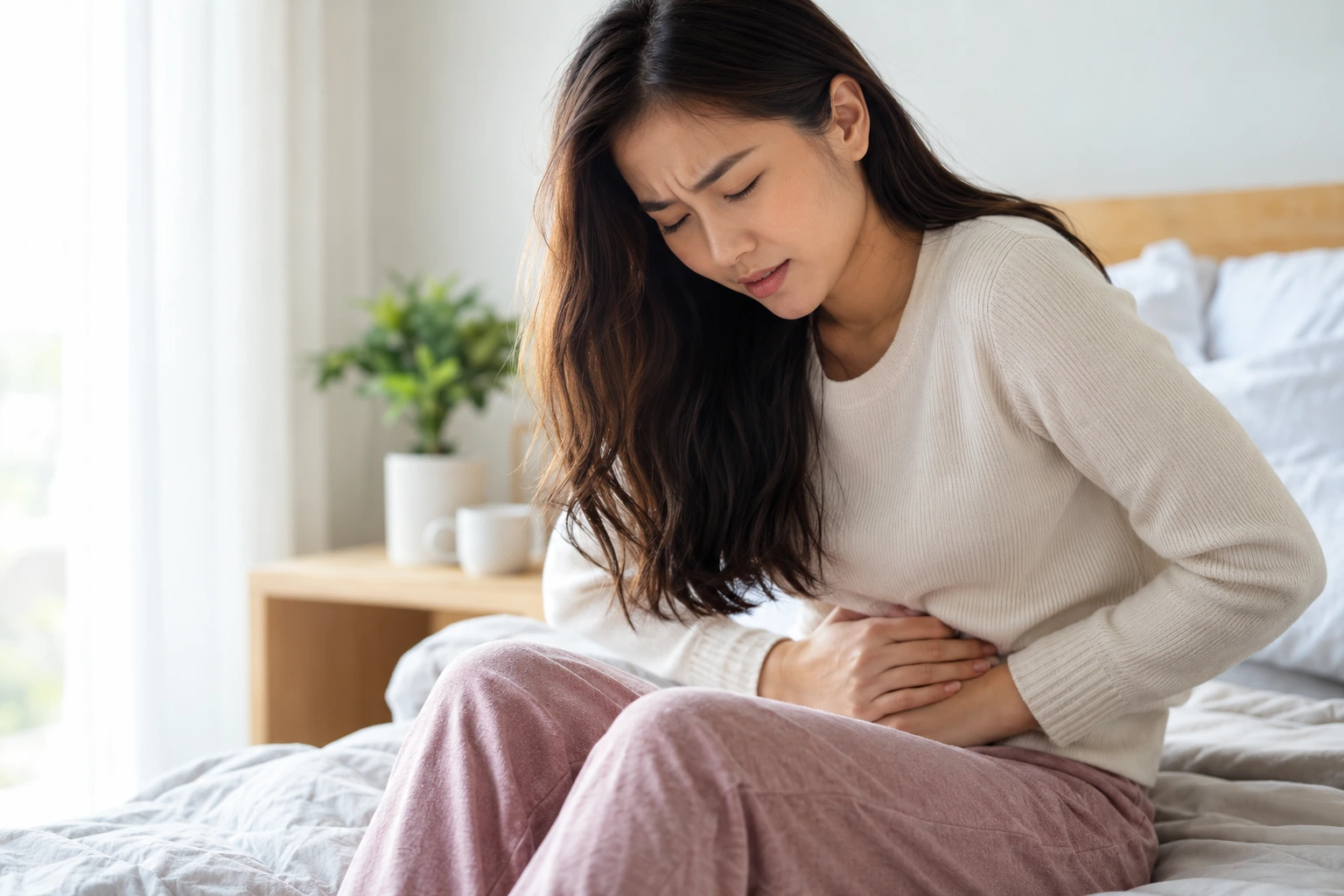
- Useful signs include needing to change protection unusually often, bleeding through clothes or bedding, repeated large clots, bleeding for longer than usual, or having to organise daily life around access to a toilet.
- For two or three cycles, record start and end dates, heaviest days, flooding episodes, clots, pain, dizziness, breathlessness, fatigue and bleeding between periods or after sex.
- Repeated heavy bleeding can reduce iron stores and cause anaemia.
Heavy bleeding is more than a calendar problem
Useful signs include needing to change protection unusually often, bleeding through clothes or bedding, repeated large clots, bleeding for longer than usual, or having to organise daily life around access to a toilet. A clear change from your own previous pattern matters too.
Track what a clinician can use
For two or three cycles, record start and end dates, heaviest days, flooding episodes, clots, pain, dizziness, breathlessness, fatigue and bleeding between periods or after sex. Also note medicines, contraception and pregnancy possibility.
Think about iron and anaemia
Repeated heavy bleeding can reduce iron stores and cause anaemia. Symptoms can include unusual tiredness, light-headedness, breathlessness on exertion, palpitations and reduced exercise tolerance. These symptoms deserve assessment rather than automatic self-treatment.
Medical causes should stay visible
Fibroids, adenomyosis, hormonal changes, bleeding disorders and pregnancy-related problems can contribute to heavy bleeding. Traditional TCM labels do not establish whether a fibroid, anaemia or another condition is present.
Medicines and contraception matter
Hormonal contraception, anticoagulants and other medicines can change bleeding. Bring the complete medicine list and do not stop prescribed anticoagulants or hormonal medicine on your own.
Know when to seek help
Very heavy ongoing bleeding, fainting, marked weakness, shortness of breath, severe pelvic pain or possible pregnancy needs prompt conventional medical assessment.
Related reading and next steps
This page provides general health education, not an individual diagnosis or emergency plan. Persistent, severe, sudden or rapidly worsening symptoms require appropriate conventional medical assessment.