
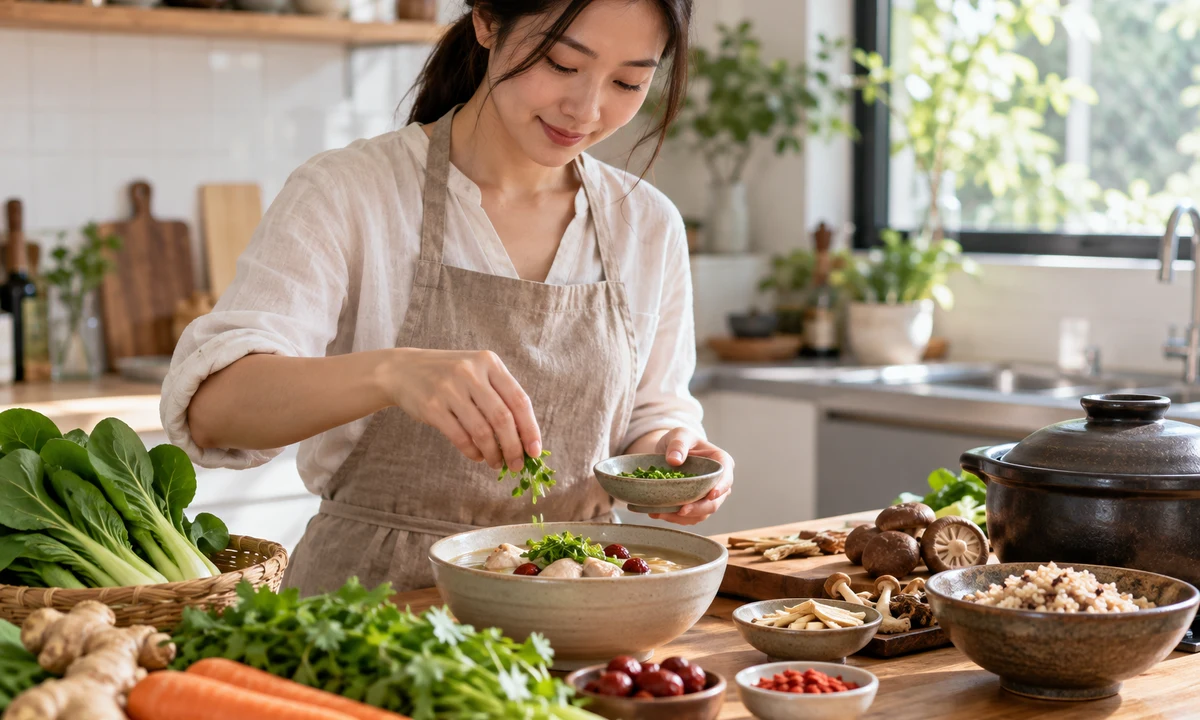
- Food supports health, but meals should not be sold as cures for serious disease.
- Medical diets and medicine interactions take priority when relevant.
- Use TCM food traditions as an additional lens, not a reason to ignore balanced nutrition.
Food has an important job already
Meals provide energy, protein, vitamins, minerals, fibre and enjoyment. A balanced diet supports long-term health without needing every ingredient to have a therapeutic claim. HealthHub emphasises variety, balance and moderation.
Traditional food language can still be useful
TCM food therapy often talks about warming, cooling, moistening or supporting digestion. These ideas can be part of cultural food choices and personal comfort. They should be presented as traditional concepts rather than laboratory diagnoses.
Do not replace necessary treatment with recipes
Food cannot replace antibiotics when they are medically needed, emergency treatment, insulin or other prescribed care. People with kidney disease, diabetes, swallowing problems, severe food allergy or other medical needs may require specific dietary advice.
Avoid unnecessary restriction
If a list of “forbidden” foods becomes longer and longer, nutrition can suffer and eating can become stressful. Elimination diets should have a clear reason and an appropriate plan for reassessment.
A sensible Shande approach
Use food guidance to make ordinary meals more thoughtful: regular timing, balanced portions, adequate hydration and ingredients that suit the person. If symptoms persist, the next step is assessment, not simply adding more dietary rules.
This guide is general health education, not a diagnosis or personal treatment plan. Persistent, severe or rapidly worsening symptoms should receive appropriate medical assessment.
Further reading: HealthHub: Balanced Diet