
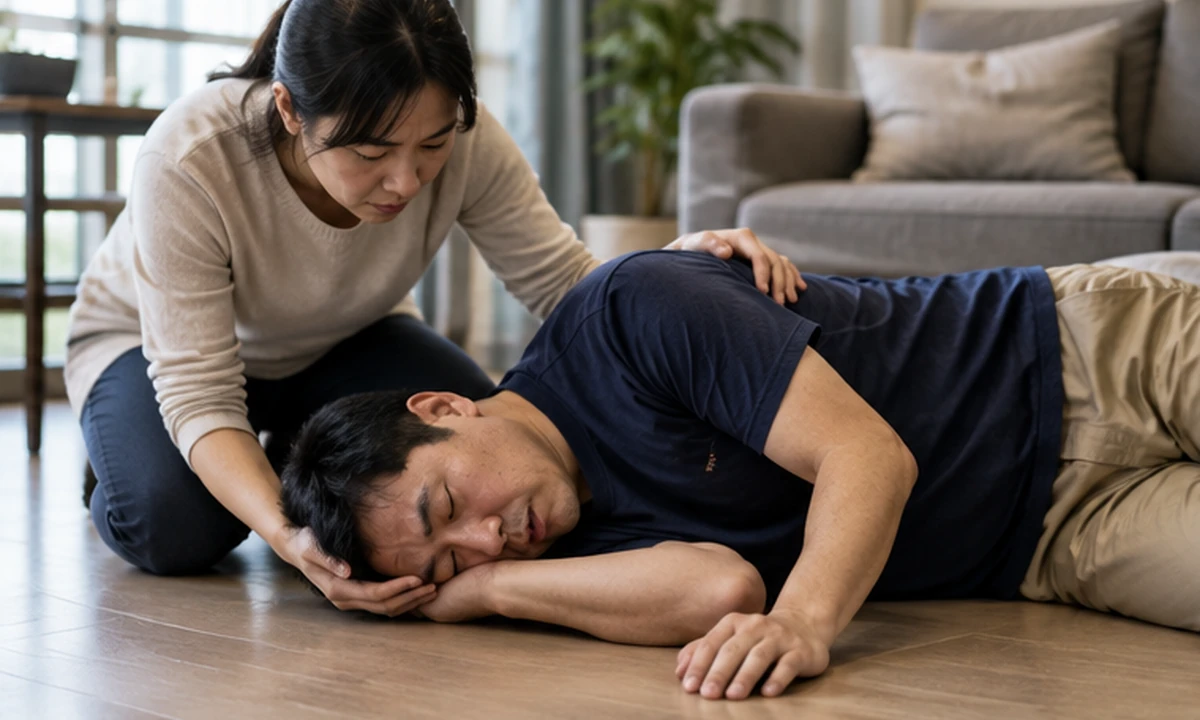
- A first seizure needs medical assessment because fainting, low glucose, infection, stroke, head injury and other conditions can mimic or trigger seizure.
- Time the seizure from the start and observe what happened before, during and after.
- Call 995 if a seizure lasts more than 5 minutes, repeats without recovery, is a first seizure, occurs in water, follows serious injury, or breathing/recovery is abnormal.
Why this deserves attention
A first seizure needs medical assessment because fainting, low glucose, infection, stroke, head injury and other conditions can mimic or trigger seizure. Most seizures stop on their own within a few minutes, but first aid should protect the person from injury—not restrain them or put objects in the mouth.
The aim is not to self-diagnose from one symptom. Onset, progression, impact on basic function and the person’s age, pregnancy status and existing conditions all affect how quickly medical review is needed.
Patterns and practical observations
- Time the seizure from the start and observe what happened before, during and after.
- Clear hard/sharp objects away and cushion the head if safe; loosen tight clothing around the neck.
- Do not restrain movements and do not put fingers, spoons, water or medicine into the mouth.
- After jerking stops, place the person on their side if appropriate, check breathing and stay until recovery.
A short timeline is often more useful than a vague description: note when symptoms began, how fast they changed, triggers, associated symptoms and any objective readings you already have. Do not delay care just to wait for a more “textbook” pattern.
Medical assessment and next steps
- A first seizure usually needs emergency/urgent assessment to identify possible causes and decide on tests such as blood work, ECG or brain imaging.
- A witness description or safe video can be useful to clinicians if it did not interfere with first aid.
- After a first unexplained seizure, avoid driving, swimming alone, heights and hazardous machinery until medically cleared.
Tests and treatment are individual. An online guide cannot replace examination, laboratory testing, imaging or specialist judgement; if you already have prescribed treatment, discuss changes with the treating team rather than adjusting it independently.
Where TCM may fit
Acupuncture or herbs must not delay first-seizure assessment. If epilepsy is later diagnosed, never stop anti-seizure medicines because complementary treatment is started; herb–drug interactions need review.
Tell both the TCM practitioner and medical team about every herb, supplement, prescription and over-the-counter medicine. “Natural” does not mean interaction-free, particularly in pregnancy, breastfeeding, liver/kidney disease, anticoagulation or polypharmacy.
When not to wait
- Call 995 if a seizure lasts more than 5 minutes, repeats without recovery, is a first seizure, occurs in water, follows serious injury, or breathing/recovery is abnormal.
- Pregnancy, diabetes, serious infection or persistent new neurological deficits after a seizure lowers the threshold for emergency care.
In Singapore, call 995 for a life-threatening emergency. If symptoms are serious and you are unsure, prioritise appropriate conventional medical assessment rather than waiting for a complementary-care appointment.
Related reading
Singapore references
This page was checked in September 2026 against current Singapore public-health / healthcare information. These links are for further reading; individual screening intervals, diagnostic thresholds and treatment should still be decided by your own medical team.
This page provides general health education, not an individual diagnosis or emergency plan. Sudden, severe, persistent or rapidly worsening symptoms—especially the red flags above—require appropriate conventional medical assessment.