
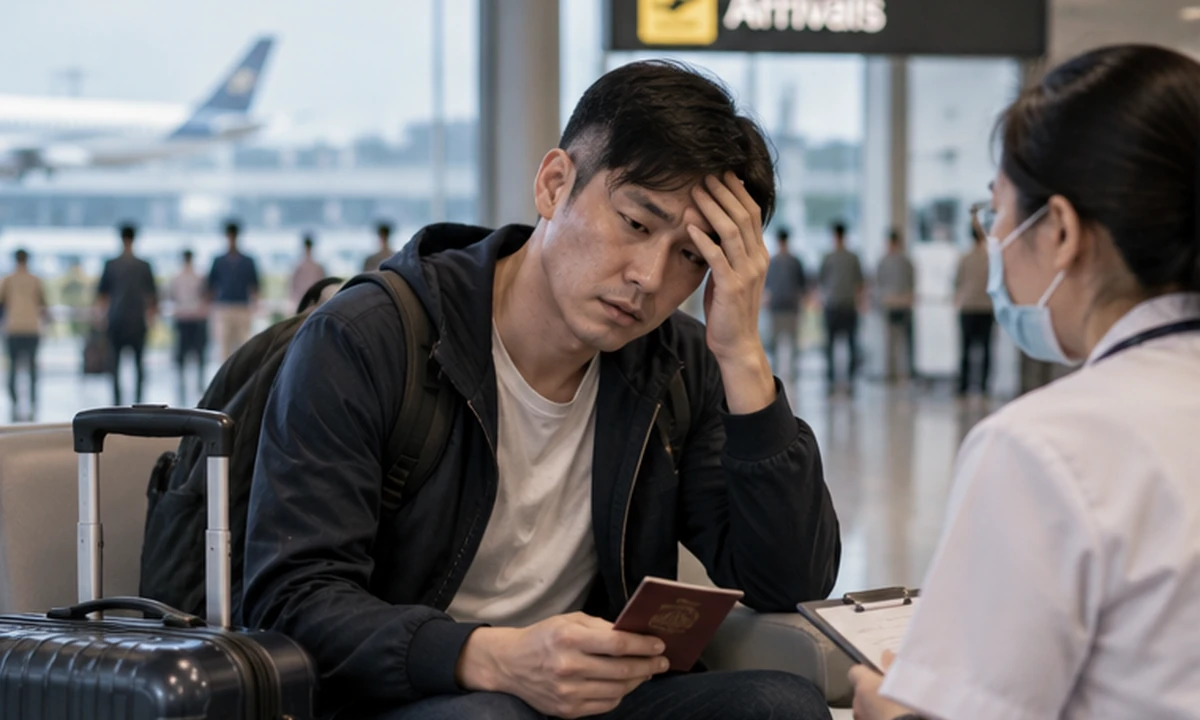
- A fever after overseas travel deserves a travel history, not just a label of “viral fever”.
- Write down every country/city visited and the exact travel dates, including stopovers if relevant.
- Severe breathing difficulty, confusion, collapse, seizures, significant bleeding, jaundice with marked illness, or inability to drink needs urgent/emergency care.
Why this deserves attention
A fever after overseas travel deserves a travel history, not just a label of “viral fever”. The destination, timing, mosquito or animal exposure, food/water, freshwater activities, illness contacts and medicines taken can change what doctors need to consider.
The aim is not to self-diagnose from one symptom. Onset, progression, impact on basic function and the person’s age, pregnancy status and existing conditions all affect how quickly medical review is needed.
Patterns and practical observations
- Write down every country/city visited and the exact travel dates, including stopovers if relevant.
- Mention mosquito/tick bites, freshwater swimming, animal contact, unprotected sex, medical procedures, mass gatherings and sick companions where applicable.
- Note diarrhoea, rash, jaundice, cough, severe headache, bleeding or urinary symptoms alongside the fever.
- Some travel-related infections can appear after you return; malaria is one reason a clinician may need the travel history even when symptoms are delayed.
A short timeline is often more useful than a vague description: note when symptoms began, how fast they changed, triggers, associated symptoms and any objective readings you already have. Do not delay care just to wait for a more “textbook” pattern.
Medical assessment and next steps
- Tell the clinic about recent travel when booking or arriving so infection-control and testing decisions can be made appropriately.
- Do not self-treat repeatedly with leftover antibiotics or antimalarials; the wrong drug can mask symptoms and delay diagnosis.
- Hydration and fever care should follow the same caution as any febrile illness, with a lower threshold for review after high-risk travel.
Tests and treatment are individual. An online guide cannot replace examination, laboratory testing, imaging or specialist judgement; if you already have prescribed treatment, discuss changes with the treating team rather than adjusting it independently.
Where TCM may fit
TCM should not delay infectious-disease testing after travel. If complementary care is later considered, disclose the travel diagnosis and all antimalarial, antibiotic or antiviral medicines.
Tell both the TCM practitioner and medical team about every herb, supplement, prescription and over-the-counter medicine. “Natural” does not mean interaction-free, particularly in pregnancy, breastfeeding, liver/kidney disease, anticoagulation or polypharmacy.
When not to wait
- Severe breathing difficulty, confusion, collapse, seizures, significant bleeding, jaundice with marked illness, or inability to drink needs urgent/emergency care.
- Fever after travel to a malaria-risk area should be medically assessed promptly and the travel history clearly stated.
In Singapore, call 995 for a life-threatening emergency. If symptoms are serious and you are unsure, prioritise appropriate conventional medical assessment rather than waiting for a complementary-care appointment.
Related reading
Singapore references
This page was checked in September 2026 against current Singapore public-health / healthcare information. These links are for further reading; individual screening intervals, diagnostic thresholds and treatment should still be decided by your own medical team.
This page provides general health education, not an individual diagnosis or emergency plan. Sudden, severe, persistent or rapidly worsening symptoms—especially the red flags above—require appropriate conventional medical assessment.