
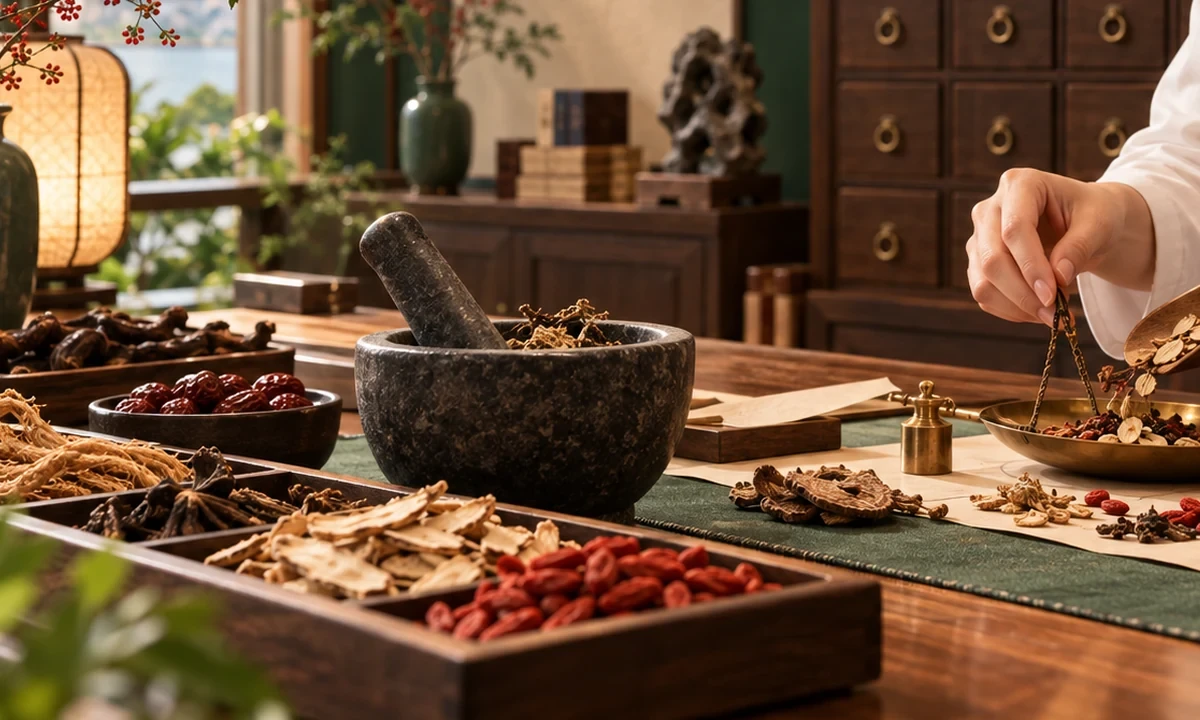
- Food therapy should support ordinary nutrition, not replace medical treatment.
- “Warming” and “cooling” are traditional categories, not literal temperature measurements.
- A varied diet is usually more useful than obsessing over one “superfood”.
Food first, medicine second
Traditional Chinese food therapy has a long history, but everyday meals should remain meals. Ginger, pear, red dates, barley, soups and herbal-style dishes can be enjoyed as food without promising that one ingredient will cure a disease.
Understand the traditional vocabulary
Terms such as warming, cooling, moistening or drying describe traditional qualities and patterns. They are not the same as calories, vitamins, glycaemic index or the physical temperature of a dish. It is useful to keep the two systems distinct.
Build a meal, not a remedy cabinet
A practical plate still needs enough protein, vegetables, staple foods and overall variety. Soups can be nourishing, but very salty soup or large portions may not suit everyone. People with diabetes, kidney disease or other conditions should follow medical dietary advice.
Use personal response as information
If a food repeatedly causes bloating, reflux, allergy symptoms or diarrhoea, that matters more than whether a chart labels it “warming” or “cooling”. Keep notes if necessary and discuss persistent reactions with a healthcare professional.
Be careful with medicinal herbs in cooking
When a recipe uses ingredients in medicinal quantities or unfamiliar herbs, the line between food and medicine can become less clear. Pregnancy, medicines and chronic conditions can change what is appropriate, so ask a qualified practitioner when in doubt.
Keep food advice practical
A food tradition can be useful without turning every meal into medicine. Ask whether the suggestion fits your actual diet, allergies and medical conditions, what evidence or tradition it comes from, and whether it is intended as general nourishment or a treatment claim. Sustainable meals usually matter more than one special ingredient.
Think in meals, not miracle ingredients
Rather than adding many special ingredients, look at what a normal week of meals actually contains. Regular meals, adequate protein, vegetables, fibre and appropriate hydration form the background against which traditional food ideas can be used. If one ingredient is promoted as solving many unrelated problems, treat the claim cautiously and keep expectations proportional.
This guide is general information, not a diagnosis or personal treatment plan. Persistent, severe or rapidly worsening symptoms should be medically assessed.