
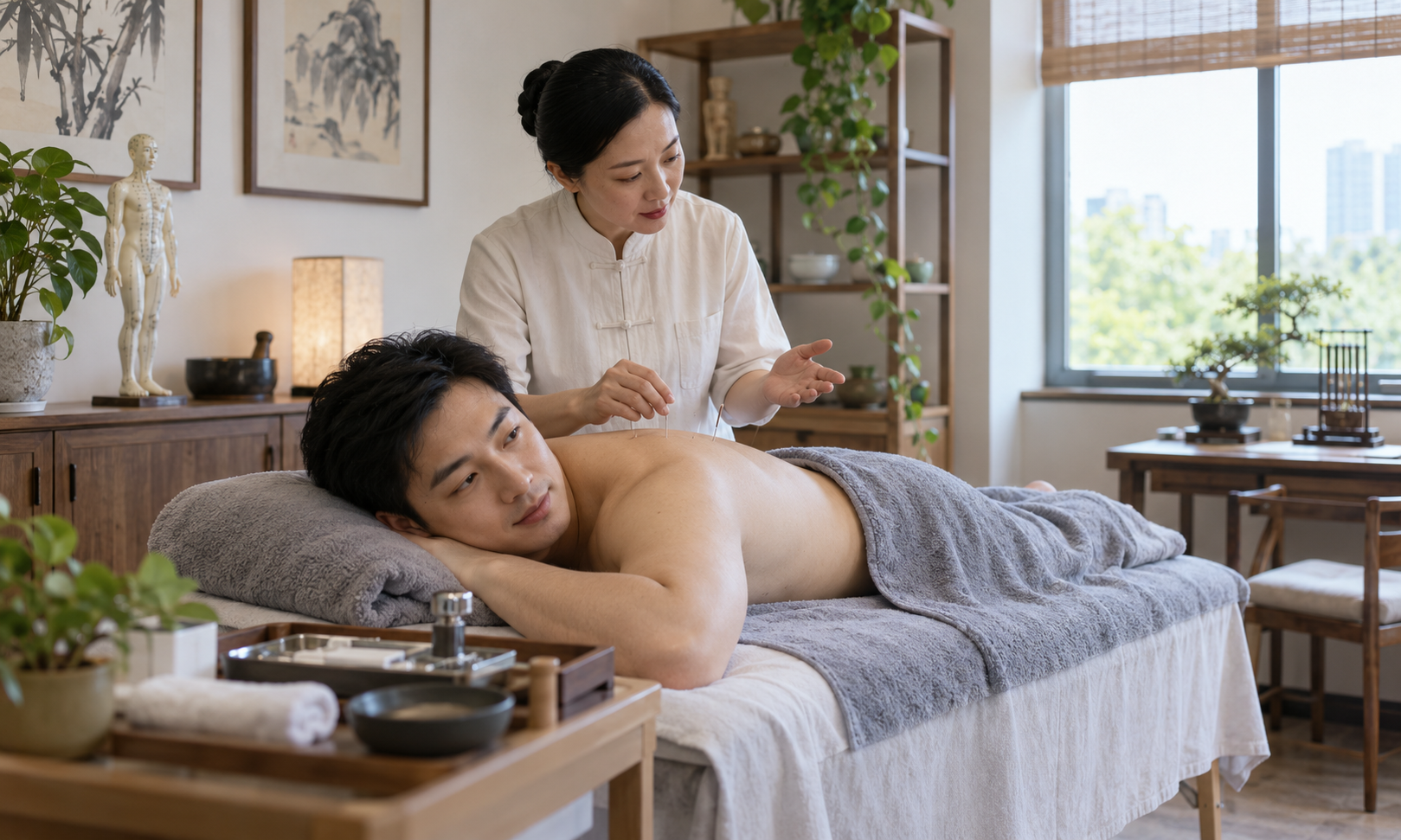
Before acupuncture
Have a light meal unless you have been told otherwise, avoid arriving intoxicated and wear clothing that allows access to the treatment area. Tell the practitioner about pregnancy, blood thinners, bleeding disorders and implanted medical devices.
During the session
Needles should be sterile and single-use. People describe sensations differently: some notice pressure, heaviness, tingling or a dull ache. Sharp or intolerable pain should be reported immediately.
After the session
Some people feel relaxed or tired. Move slowly when getting up, drink normally and follow any individual instructions provided. Contact the clinic if you have an unexpected reaction that concerns you.
Safety first
Acupuncture is not a substitute for emergency care. New neurological symptoms, chest pain, breathing difficulty or severe worsening symptoms should be assessed urgently by conventional medical services.
A good session starts before the first needle
Eat normally unless you have been given specific instructions, arrive with enough time to settle, and avoid alcohol before treatment. Wear clothing that gives reasonable access to the area being discussed. Tell the practitioner if you are pregnant, take blood-thinning medicines, have a bleeding disorder, are prone to fainting, have implanted devices or have a condition that changes skin sensation.
What should feel normal - and what should not
People describe acupuncture sensations differently. A brief dull ache, heaviness, tingling or pressure may occur. What matters is communication: sharp, burning, electrical or intolerable pain should be reported immediately. The practitioner can adjust or remove a needle. You do not need to “endure” severe pain to make a treatment effective.
After the appointment
Some people feel relaxed or tired, while others feel little difference immediately. Get up slowly, hydrate normally and follow any individual instructions. Mild local tenderness can occur, but unexpected or concerning reactions should be discussed with the clinic. Acupuncture should complement, not delay, investigation of serious or rapidly worsening symptoms.
Sterile technique matters more than ceremony
Acupuncture needles used in modern clinical practice should be sterile and single-use. The practitioner should clean the relevant area where appropriate, use safe handling technique and dispose of sharps properly. You do not need to understand every infection-control detail, but it is reasonable to expect a clean clinical environment and to ask questions if something makes you uncomfortable.
Point selection is individual, not a fixed recipe
Two people with similar pain can receive different point selections because the practitioner may consider location, movement, other symptoms and the TCM pattern being used. This does not mean every variation is automatically correct. You can still ask what the chosen points are intended to support and how the practitioner will decide whether the approach is helping.
More needles are not automatically better
A session may use only a few needles or more, depending on the treatment plan. Number of needles, stronger sensation and longer retention do not automatically mean a more effective session. The treatment should remain tolerable, and a good practitioner should adapt if you are anxious, sensitive, frail or prone to fainting.
Certain situations deserve extra discussion
Pregnancy, blood-thinning medicines, bleeding disorders, immune suppression, implanted electrical devices, severe skin problems, reduced sensation and a history of fainting can affect how acupuncture is planned. These factors do not always mean acupuncture is impossible, but they should be disclosed before treatment rather than discovered afterwards.
Know what would count as progress
For a recurring problem, decide what improvement means before starting a long course. It may be fewer pain days, easier movement, better sleep or improved function at work. If nothing meaningful changes after a reasonable review period, ask whether the diagnosis, treatment approach or overall plan should be reconsidered.
This article is general information, not a diagnosis or personal treatment plan. For severe or urgent symptoms, seek conventional medical care promptly.
A course of care should not be open-ended by default
Some problems may justify several sessions, but the number should be linked to a review plan. Ask when the practitioner expects to reassess symptoms and function. If each visit automatically leads to another without any discussion of progress, the treatment plan is incomplete. A reasonable course should have a purpose, a review point and a clear reason for continuing.
Aftercare is usually simple
Most people can return to normal activity after acupuncture unless given individual advice. Mild local soreness or a small bruise can occur. Contact the clinic if something unexpected worries you, and seek medical care for severe or rapidly worsening symptoms. Avoid turning normal aftercare into a long list of unnecessary restrictions unless there is a specific clinical reason.